

 Current position > Product detail
『Crude Oil Flow Meter Real-Time Net Oil Computing』Related information(flow rotameter|digital flow meter|balo meter|hydraulic flow meter|volumetric meter|positive displacement meter|pitot tube flow meter|displacement meter|cfm meter|variable area flow meter|inline flow meter|differential pressure flow meter|calibrated flow meter|velocity meter|paddle wheel flow meter|oval gear flow meter|anemometer hvac|multiphase flow meter|doppler flow meter|thorpe tube flowmeter|heat flow meter)
Crude Oil Flow Meter Real-Time Net Oil Computing
Quick Answer: Real-time net oil computing merges a Coriolis mass flow meter with a water cut analyzer to subtract water content and deliver net oil mass flow directly. Silver Automation Instruments supplies integrated flow skids that output 4-20 mA HART, Modbus, or pulse signals for DCS and SCADA. This setup removes the guesswork from well testing and fiscal allocation, especially on offshore platforms and remote desert well pads.
What Real-Time Net Oil Computing Fixes in Your Oil Field
Manual sampling and lab testing introduce delays that can cost a producer thousands of barrels in misallocated crude. Real-time net oil computing closes that gap. The concept is simple. You measure total fluid mass and density with a Coriolis meter, you capture volumetric water fraction with an online moisture analyzer, and you run a density-based math block inside the flow computer. The output is net oil mass flow in kg/h. No sample waiting, no manual logbook entries. We have seen this reduce allocation disputes between partners on a shared pipeline in the Gulf of Thailand.
Most engineers skip the complexity and want a prewired skid. So we build a stainless steel panel with the Coriolis sensor, a water cut probe, an explosion-proof flow computer, and a local display. It works right out of the crate. Field crews in Oman and Malaysia appreciate the 24 V DC loop power because solar panels can handle it. No need for 230 V AC in the middle of nowhere.
How a Coriolis Meter Delivers Net Oil Data Without Guesswork
The heart of the system is a twin-bend Coriolis mass flow meter, typically DN25 to DN80 for single well pads. Silver Instruments sizes the meter so that the velocity stays above 1 m/s even when gas void fraction hits 5 percent. That keeps the tube vibrating cleanly. The meter measures mass flow at plus minus 0.15 percent of rate and density at plus minus 0.5 kg/m3. Stable density is the secret. Because crude oil density shifts with temperature, the Coriolis also reports live fluid temperature via its built-in PT100, and the flow computer compensates density to 15 degrees C automatically.
Here is the thing about water cut analyzers. A capacitance-based probe works for light crude with water content above 3 percent. For heavy crude from fields in Mexico or Venezuela, we recommend a microwave resonator that handles 0 to 100 percent water and copes with entrained gas. One analog input from the water cut meter, one analog input from the Coriolis. That is all the data you need. The flow computer subtracts water mass from total mass and gives you net oil, corrected to standard conditions. The result shows up on a digital display and travels as a 4-20 mA signal to the RTU. No fancy algorithms to maintain.
Typical Installations We See in Southeast Asia and the Middle East
Last year a customer in Indonesia needed custody transfer measurement for crude going into a floating storage vessel. They had a pipe size of DN100, operating pressure 28 bar, temperature around 45 degrees C, and API gravity 32. Gas carry-under was small but not zero. We supplied a Silver Automation Instruments Coriolis meter with remote sensor and a mechanical water cut sample
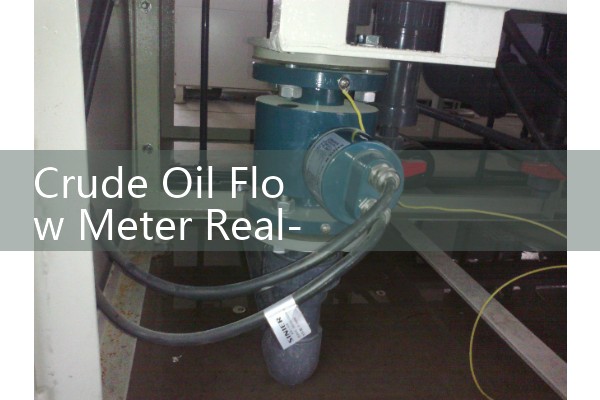
In the Middle East, a flow station in Iraq replaced a turbine meter and manual BS&W probe with our Coriolis plus water cut kit. Their concern was sand erosion. A Coriolis has no moving parts inside the tubes, so sand just passes through. Flow range was 15 to 60 m3 per hour of well fluid. We gave them a DN80 sensor with Hastelloy C-22 wetted parts. The meter paired with an ATEX Zone 1 water cut analyzer from a European partner. Signals linked via 4-20 mA HART into an existing ABB flow computer. Mechanical commissioning took three days. Since then they perform zero verification tests every quarter using the meter’s built-in diagnostics. No need to pull the meter from the line.
Five Questions Engineers Ask Before Specifying a Net Oil Flow Meter
1. Can I skip the water cut analyzer and just use the Coriolis alone? A Coriolis meter alone cannot distinguish oil from water because both liquids have similar densities at some temperatures. You must pair it with a water cut analyzer, or accept a rough estimate based on live density and known pure oil density. That guess is not good enough for custody transfer or production allocation.
2. What accuracy do you guarantee for net oil mass flow? With a properly sized Coriolis and a calibrated water cut meter, we typically achieve plus minus 0.5 percent of reading for net oil mass flow when the water cut is between 5 and 95 percent. Outside that range the uncertainty increases slightly. We provide a full uncertainty budget with every proposal.
3. Is this setup certified for Zone 1 hazardous areas? Yes. Silver Automation Instruments can supply the Coriolis sensor with ATEX or IECEx Zone 1 certification for gas groups IIB and IIC. The water cut probe and flow computer follow the same certification. All components meet the local electrical code for onshore well pads and offshore platforms.
4. Do you provide a complete skid or just the instruments? We deliver both. The skid package includes the meter, water cut probe, piping spool, a flow computer, isolation valves, and a weatherproof enclosure. It arrives pressure-tested and wired to a terminal box. You just bolt it in and power it up.
5. How do I request a budget price? Send us your operating pressure in bar, fluid temperature in degrees C, pipe diameter in DN, crude type (light or heavy), expected water cut range, and the flow range in kg/h or barrels per day. We will return a specific quote within two working days. You can reach our engineering team through the Coriolis mass flow meter page on flow-meter.com.au.
Because every oil field has unique viscosities and gas fractions, we strongly recommend sharing a sample of your well test data. We match meter size to your actual Reynolds number to keep measurement uncertainty low. See our crude oil flow metering page for real installation photos from the field.