

 Current position > News detail
『How a Compressed Air Flow Meter Reduces Energy Costs in Factories』Related information(flow rotameter|digital flow meter|balo meter|hydraulic flow meter|volumetric meter|positive displacement meter|pitot tube flow meter|displacement meter|cfm meter|variable area flow meter|inline flow meter|differential pressure flow meter|calibrated flow meter|velocity meter|paddle wheel flow meter|oval gear flow meter|anemometer hvac|multiphase flow meter|doppler flow meter|thorpe tube flowmeter|heat flow meter)
How a Compressed Air Flow Meter Reduces Energy Costs in Factories
Quick Answer: A compressed air flow meter tells you exactly how much air each branch of your plant uses. Fixing leaks and matching supply to real demand can cut your compressor electricity bill by 20 to 30 percent. Without a meter, you are only guessing and the default fix is normally a larger compressor, which wastes even more power.
Factories in Southeast Asia and the Middle East often run compressed air systems that eat 10 to 15 percent of total site energy. We have visited plants where the air compressors keep loading and unloading all day and nobody knows why. A flow meter installed on the main header and on each large consumer line changes that immediately.
Why Compressed Air Systems Waste So Much Energy
Many plants have leaks. Even a well-maintained system can leak 20 to 30 percent of the air it produces. That is air you already paid to compress just venting to atmosphere. Pressure drop in undersized pipes is another silent cost. You set the compressor to 7 bar but at the point of use the pressure is only 5.5 bar. The operator complains, so the service team turns up the compressor setpoint. This burns more power while the real restriction stays hidden. A flow meter reads in kg/h or Nm3/h and shows how much air each zone draws. That data gives you a baseline you can act on.
How a Flow Meter Pinpoints the Real Problem
Without a meter, the only number you see is total energy at the switchboard. You do not know if the packaging line uses 30 percent of your compressed air or if a stuck solenoid valve is blowing air 24 hours a day. A thermal mass flow meter installed on a DN50 or DN80 branch line will reveal such loads immediately. We have seen a paint manufacturer in Vietnam who discovered an air knife left open during lunch break. The meter logged a spike every day at noon. Fixing it saved 4 kW continuously for two hours a day. That added up to roughly 2,900 kWh per year just from that one correction.
Thermal Mass Flow Meters: The Right Tool for Compressed Air
For compressed air and nitrogen, thermal mass flow meters work very well. They read mass flow directly without needing separate temperature or pressure compensation. The insertion probe can be mounted in pipes from DN40 up to DN300. You get a 4-20 mA HART signal and often a digital totalizer. Silver Instruments supplies these meters calibrated for air at your working pressure and temperature. Tell us your pipe size, max flow in kg/h, and whether you need ATEX Zone 1 certification. Many customers in the Middle East order them with integral displays and Modbus RTU for their PLCs. This gives the site team a real-time reading they can track shift by shift.
Specific Installation Tips From the Field
Most engineers skip this part but it matters. Install the flow meter on a straight run of pipe. A rule of thumb is 15D upstream and 5D downstream, where D is your pipe diameter. For a DN80 line, that means 1.2 meters of straight pipe before the meter. If you have a valve or elbow right in front of the probe, the reading can shift by 5 to 10 percent. We learned this from a food factory in Thailand where the meter was placed right after a reducing elbow. Once we moved it 10 diameters downstream, the flow value stabilized.
Also, mount the probe at the correct insertion depth. For horizontal pipes, insert from the top to avoid oil or water droplets. Even tiny amounts of oil can affect the sensor. Compressed air always has some condensate carryover. A tee-piece and a ball valve allow hot-tap installation without shutting off the line. Silver Instruments provides a hot-tap kit that fits DN25 to DN100 pipes.
Real Savings: An Example from a Packaging Plant in Thailand
In 2023 a packaging plant in Thailand installed three Silver Instruments thermal mass flow meters on their main header and two branch lines. Before m
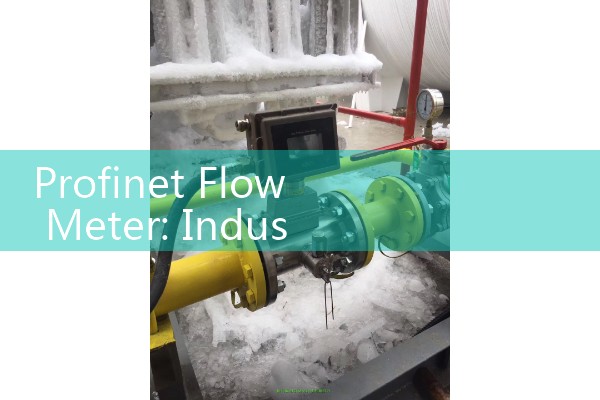
Here is the thing: the payback was under 4 months. The factory manager told us he had asked for a compressed air audit quote from an external consultancy. That quote was 3 times the cost of the meters. He bought the meters instead and kept them as a permanent asset.
Pairing Flow Data with Your Pressure and Temperature Sensors
Compressed air energy is not only about flow. You need pressure and temperature to calculate the true mass balance. Silver Instruments offers compact paperless recorders that accept 4-20 mA signals from flow meters, pressure transmitters, and PT100 temperature probes. With a small touch screen unit installed near the compressor room, the team can see at a glance how many kg of air per hour each line uses and at what pressure. This makes energy reviews faster. Instead of weekly manual readings, you have a trend file you can export via USB.
Integration is simple. The flow meter output goes to a PLC analog input card, or you can use a Modbus register directly to your SCADA. Many plants in Latin America use our recorders to log both flow and dew point data for ISO 8573 compliance.
Why Silver Instruments Makes Sense for Your Plant
We do not just sell meters. We help you size correctly the first time. When you send us your pressure in bar, temperature in °C, pipe size in DN, and approximate flow range, we recommend the right model and wake frequency calculation. This avoids the problem of buying an oversized meter that reads poorly at low flows. We ship from our factory to your country quickly, usually within 2 weeks for standard models. Our support team speaks English, Spanish, Arabic, and Portuguese. After delivery, we provide wiring diagrams and MODBUS register maps directly over WhatsApp or email.
Send your requirements to [email protected] or call +86-135-1213-1526. You can also reach us on Whatsapp at 86-135-12131526 or WeChat at +86 13512131526. Tell us your pressure (bar), temperature (°C), pipe size (DN), and max flow rate. We will send you a quote and a technical drawing within one working day.
Can I install a flow meter in an existing pipe without stopping production?
Yes. Our insertion thermal mass meters support hot-tap installation with a ball valve and a 1/2 inch NPT fitting. You drill under pressure and extract the probe for cleaning without shutting down the line.
What is the typical accuracy for compressed air flow measurement?
We specify ±1.5 percent of reading plus ±0.5 percent of full scale for air and nitrogen. This is enough for energy management and ISO 50001 reporting.
Do I need ATEX certification for a compressor room?
It depends on your local zone classification. Many compressor rooms are safe areas. But if you have gas pipelines nearby or an Ex-rated compressor package, specify Zone 2 or Zone 1. Silver Instruments offers ATEX and IECEx options for thermal mass flow meters.
Can the flow meter connect to my existing PLC or energy management system?
Yes. Standard outputs are 4-20 mA HART, pulse, and Modbus RTU. The Modbus register map is open and we provide it before shipping.
How do I choose the right pipe size and flow range?
Send us your minimum and maximum flow in kg/h or Nm3/h, line pressure, and pipe diameter. We will select the correct insertion probe length and calculate the wake frequency to avoid signal dropout at low flows.