

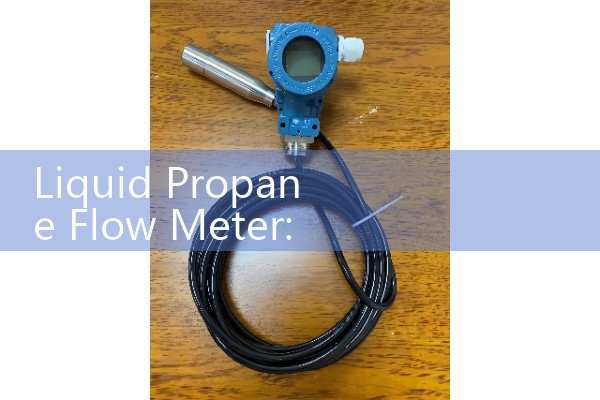
『Liquid Propane Flow Meter: High-Pressure LPG Delivery Sensors』Related information(flow rotameter|digital flow meter|balo meter|hydraulic flow meter|volumetric meter|positive displacement meter|pitot tube flow meter|displacement meter|cfm meter|variable area flow meter|inline flow meter|differential pressure flow meter|calibrated flow meter|velocity meter|paddle wheel flow meter|oval gear flow meter|anemometer hvac|multiphase flow meter|doppler flow meter|thorpe tube flowmeter|heat flow meter)
Liquid Propane Flow Meter: High-Pressure LPG Delivery Sensors
Quick Answer: For high-pressure liquid propane transfer, a Coriolis mass flow meter measures kg/h or tonnes per hour directly and stays stable even when line pressure hits 60 bar, 80 bar, or 100 bar. The meter reads mass flow at the actual process conditions and does not need a separate pressure transmitter, temperature sensor, or flow computer to do density compensation. Silver Instruments supplies ATEX-certified Coriolis meters for LPG truck loading, cylinder filling, and custody transfer in markets across Southeast Asia, the Middle East, and Latin America.
Why High-Pressure LPG Measurement Needs More Than a Basic Flow Meter
Liquid propane sits just above its boiling point at any given pressure. At 25 bar the vapour-liquid equilibrium is tight. When delivery pressure drops by even two or three bar inside a pipe reducer or a valve, dissolved gases break out and form vapour pockets. Volume-based meters such as turbine meters, vortex meters, and oval gear meters read the combined liquid and gas volume. Their accuracy can shift by 3 percent to 7 percent in a few minutes. A Coriolis mass flow meter avoids this problem because the vibrating tubes measure mass directly and ignore gas bubbles that pass through the sensor. We have seen this on customer sites many times, especially on LPG tanker unloading skids in Indonesia and the Philippines where pipe layout is not ideal.
Coriolis Meter Versus Oval Gear and Turbine Meters in Propane Service
An oval gear flow meter for LPG works when the liquid stays 100 percent liquid, which in practice needs a back-pressure valve and careful line sizing. Most engineers skip this part: they install an oval gear meter without enough back pressure and then find the gears wear faster because LPG has low lubricity. A turbine meter also needs a strainer, a straight run, and flow conditioning to hit its published accuracy. On high-pressure propane trailers that unload at 30 bar to 50 bar, the turbine bearings can degrade within six months. A Coriolis meter has no moving parts in the flow path. It handles 0.1 mm to 2 mm entrained solids from pipeline scale and does not demand upstream straight runs. The installed cost may be higher, but the three-year cost of ownership usually drops once you remove the maintenance stops. Silver Instruments has supplied a DN25 Coriolis mass flow meter for LPG to a distributor in Vietnam that previously replaced oval gears every eight months. That meter has now run for two full seasons without a single service call.
Key Specifications for a High-Pressure LPG Flow Sensor
When you request a quotation, specify these parameters so the factory configures the sensor correctly. Line size is typically DN15, DN20, DN25, DN40, or DN50 for mid-sized distribution. Flow range is in kg/h: a DN25 meter often covers 800 kg/h to 24,000 kg/h. Operating pressure matters for the flange rating. Many LPG depots in the Middle East run Class 600 or Class 900 flanges, but some high-pressure cylinder filling stations in Latin America use Class 1500 rated meter bodies. Material of construction is normally 316L stainless steel wetted parts with PTFE or Kalrez O-rings. Process connection can be threaded (NPT, BSPT) or flanged (ANSI, DIN, JIS). Outputs should include 4-20 mA HART, pulse, and Modbus RTU. For hazardous areas, the meter needs ATEX Zone 1 or IECEx certification. Accuracy for liquid LPG is often 0.2 percent of rate or better. Some models meet OIML R117-1 for custody transfer when you need to bill by mass. Silver Instruments can provide a complete package with a high-pressure flow sensor, a remote transmitter, and a factory calibrat
Installation Notes That Reduce Measurement Drift
Mount the sensor so the tubes stay full, which usually means horizontal installation with flow from left to right or bottom to top. Avoid putting the meter at the highest point of the pipe where vapour collects. A small back-pressure regulator downstream keeps the liquid propane inside the sensor above its vapour pressure. Set the regulator at 1 bar to 2 bar above the bubble point at pump temperature. Use flexible hoses or expansion loops on the inlet and outlet to isolate stress from thermal growth. Bolt the meter to a rigid support. Because temperature of liquid propane in a sun-exposed pipe in Saudi Arabia or Ghana can swing from 25 degrees Celsius to 50 degrees Celsius in an afternoon, you want to minimise external pipeline stress that could shift the zero point. A zero check takes 30 seconds on the local display. Most site technicians do the zero check before the first batch of the day and the meter holds calibration for weeks. If the meter shows erratic flow, check for filter blockage or a stuck check valve before you suspect the sensor itself.
Where Silver Instruments Fits Into Your LPG Project
We are a flow meter manufacturer based in Nanjing, China, with active distribution in Australia, Thailand, Nigeria, Mexico, and the UAE. Our LPG Coriolis meters leave the factory pre-configured for your process. You tell us the fluid (propane, butane, or a mix), the minimum and maximum mass flow in kg/h, the normal operating pressure in bar, and the pipe schedule. We build a meter with the right tube material, flange rating, and electronics output. Lead time for DN15 to DN50 LPG meters is normally three to four weeks. Larger sizes up to DN100 are available on request. We also supply secondary instruments such as pressure transmitters and paperless recorders if you need a full metering panel.
FAQ: High-Pressure Liquid Propane Flow Meters
Q: What is the most reliable flow meter for high-pressure LPG delivery?
A: A Coriolis mass flow meter gives the most stable measurement because it reads mass flow directly and ignores phase changes or pressure swings. Silver Instruments supplies Coriolis meters rated to 100 bar with ATEX and IECEx certification.
Q: Can I use a turbine flow meter for propane truck loading at 35 bar?
A: You can, but turbine accuracy depends on clean, single-phase liquid and a full straight run upstream. In many real-world skids the installation space is tight and liquid propane often carries trace vapour. Coriolis meters tolerate these conditions much better.
Q: Do I need a flow computer for mass flow calculation when using a volumetric meter?
A: Yes, a turbine or vortex meter will need an external flow computer, temperature sensor, and pressure transmitter to convert volume to mass. A Coriolis meter sends kg/h directly over 4-20 mA or Modbus, cutting out the extra devices and wiring.
Q: What is the typical pipe size range for a high-pressure LPG flow meter?
A: Most distribution and filling applications use DN15 to DN50. Line size depends on pump capacity. Send us your flow range, operating pressure, and pipe schedule so we can select the sensor that matches your system best.
Q: How do I get a price and delivery time for an LPG mass flow meter?
A: Contact Silver Instruments at [email protected] or call +86-135-1213-1526. Our WhatsApp number is 86-135-12131526 and WeChat is +86 13512131526. Provide the pressure in bar, temperature in degrees Celsius, pipe size in DN, and mass flow range in kg/h. Our applications team will return a quote within one working day.
 Hot Blog
 Related AD