

『High Temp Water Flow Meter Sizing: Vortex and Turbine Elements for District Heating Infrastructure』Related information(flow rotameter|digital flow meter|balo meter|hydraulic flow meter|volumetric meter|positive displacement meter|pitot tube flow meter|displacement meter|cfm meter|variable area flow meter|inline flow meter|differential pressure flow meter|calibrated flow meter|velocity meter|paddle wheel flow meter|oval gear flow meter|anemometer hvac|multiphase flow meter|doppler flow meter|thorpe tube flowmeter|heat flow meter)
High Temp Water Flow Meter Sizing: Vortex and Turbine Elements for District Heating Infrastructure
Quick Answer
For district heating water above 110 °C, vortex elements fit inline DN25 to DN300 and insertion DN150 to DN600. Turbine elements work up to 150 °C on clean hot water and suit energy metering on DN50 to DN300. Send your pipe size, pressure, temperature and flow range to Silver Instruments for a sized model.
What Changes in High Temp District Heating Water
District heating networks in North China, Korea, Mongolia and Central Europe often run supply water at 110 °C to 130 °C. Some older systems reach 150 °C. Pressure at the meter station typically sits at PN16 or PN25. That puts standard battery powered electronics at risk. High temp models from Silver Instruments use remote transmitters or metal enclosures so the sensor can stay in the pipe while the electronics are mounted away from radiant heat.
Here is the thing. Water quality matters more at high temperature. Dissolved oxygen, scale and magnetite particles can attack bearings in turbine meters. Vortex sensors have no moving parts and handle this water better. But vortex meters need a minimum flow velocity and a stable pipe profile. If the flow falls below 0.5 m/s on a DN200 line, a turbine element may read more reliably than a vortex meter. Most engineers skip this part and then wonder why the totalizer drifts.
Vortex Element Sizing Rules That Hold Up
Start with operating flow range, not pipe diameter. A DN200 pipe that runs at 40 m3/h is not the same as one that runs at 180 m3/h. For inline vortex, select a meter so the expected minimum flow stays above the cut off point. Silver Instruments sizes inline vortex elements from DN15 to DN300 for high temp water up to 250 °C. Nominal velocity goes from 0.5 m/s to 7 m/s depending on line size.
For insertion vortex meters on DN150 to DN600 mains, hot tapping is common in district heating. The insertion probe reaches the average velocity point. The insertion approach cuts material cost and valve cost on large headers. Accuracy is usually 1.0 percent of reading for liquid flow above the minimum Reynolds number of 20,000. Below that, the meter output can drop out. So check the low flow winter load, not the peak load.
Turbine Element Sizing for Hot Water
Turbine flow meters from Silver Instruments work on clean hot water up to 150 °C. The rotor bearing pair must be ceramic or tungsten carbide. Standard nylon bearings fail quickly above 90 °C. On district heating return lines at 70 °C, turbine meters are a low cost choice. On supply lines at 120 °C, specify high temp internals and a remote preamplifier.
Size the turbine so the operating velocity stays between 0.8 m/s and 8 m/s. A common mistake is putting a DN150 turbine meter on a line that only runs 25 m3/h. The rotor hardly turns and accuracy suffers. Better to reduce the meter size to DN80 if the pressure drop is acceptable. For heat metering, pair the turbine with two matched PT100 sensors and a flow computer. Silver Instruments supports 4-20 mA HART, pulse and RS485 Modbus outputs.
Straight Run, Strainer and Pressure Loss
Vortex meters need 15D upstream and 5D downstream from a single elbow. Turbine meters need 10D to 20D upstream with a flow straightener if the pipe has a control valve or two elbows in different planes. In practice, space is tight in district heating stations. Many installers skip the straightener. The turbine rotor then overreads by 2 to 4 percent. A compact straightener in a spool piece solves the swirl problem in less than 3D.
Hot water carries weld beads, rust and sealing tape after maintenance. A Y strainer or basket strainer upstream of a turbine meter is cheap insurance. Vortex meters tolerate particles better but the bluff body should be inspected during annual shutdown. Pressure loss is another sizing factor. Inline vortex meters lose between 20 and 80 kPa at nominal flow. Insertion vortex meters lose far less, typically under 15 kPa on large lines.
Signal Output and Energy Meter Integration
For a district heating substation, the meter output often goes to a building management system or heat calculator. Silver Instruments recommends 4-20 mA HART for analog loops and pulse for high resolution totalizing. RS485 Modbus with RTU is common in Balkan, Middle East
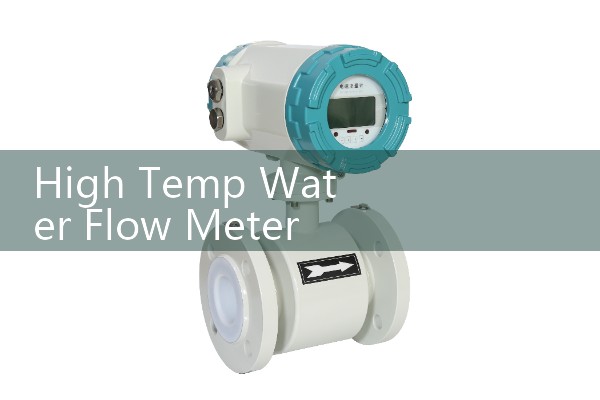
When the meter is used for billing, pair the meter with two PT100 RTDs and a flow computer that calculates energy in GJ or MWh. Temperature difference matters more than absolute temperature. A supply return delta T of 20 °C to 40 °C is normal. If the delta T falls below 10 °C, a small flow error becomes a large energy error. Sized meters with matched temperature sensors keep total uncertainty under 1.5 percent in most district heating loops.
Typical Customer Applications
A district heating contractor in Ulaanbaatar replaced four mechanical meters on DN200 supply lines. Bearing wear from 120 °C water caused underreporting. They switched to insertion vortex meters from Silver Instruments with remote transmitters. Hot tapping allowed installation during the low load season without draining the network. The customer saw stable totalizer data after two heating seasons.
In Vietnam, a turbine meter on a 95 °C boiler feed line showed zero drift after the plant added a strainer and shortened the pulse cable. The meter was paired with PT100 sensors and a local display. The plant uses the totalizer for fuel cost allocation between two production buildings. The setup is common in food and beverage steam plants in Southeast Asia.
Quick Sizing Inputs for District Heating
Before you order, gather four values. Pipe size DN, operating pressure bar, water temperature Celsius, and minimum plus maximum flow rate. Mention if the meter is on supply or return. Mention if the output goes to a PLC, heat calculator or wireless logger. Silver Instruments selects the element type, line size, body material and output board from these inputs.
If the pipe is over DN250 and you cannot shut down, choose an insertion vortex meter with a hot tap fitting. If the water is clean and below 150 °C, a turbine element may be lower cost. If the line has long low flow periods, a turbine meter can still read. If the line has bursts and pressure spikes, a vortex meter has no rotor to break.
FAQ
What is the temperature limit for vortex and turbine meters in district heating?
Vortex elements from Silver Instruments handle up to 250 °C on liquid water. Turbine elements work up to 150 °C when built with ceramic bearings and a remote preamplifier. Standard nylon bearing turbine meters should not run above 90 °C.
How do I size a flow meter for a DN200 line at 150 °C?
Do not size by pipe diameter alone. Send Silver Instruments the minimum and maximum flow rate in m3/h, the pressure in bar, and the water temperature. For high temp DN200 lines, an inline vortex or insertion vortex often fits. If the water is clean and flow stays between 40 and 400 m3/h, a turbine meter may also work.
Do I need temperature compensation for district heating energy metering?
Yes. Flow alone is not enough. Pair the meter with two matched PT100 RTD sensors and a flow computer. The flow computer calculates energy based on supply and return temperature difference. Silver Instruments supplies meters with 4-20 mA HART, pulse, and RS485 Modbus outputs for this loop.
How much straight run does a hot water turbine meter need?
Plan for 10D to 20D upstream and 5D downstream. If the pipe has two elbows in different planes or a control valve, put a flow straightener in a spool piece. Skipping the straightener often causes a 2 to 4 percent overread.
Can an insertion vortex meter be installed while the pipe is full and hot?
Yes. Hot tap installation is common on district heating mains. Use a hot tap fitting and a retractor. The process continues running. This works well on DN150 to DN600 lines where shutdown is expensive or not allowed.
Ordering and Contact Block
For a fast quote, send your pressure in bar, temperature in Celsius, pipe size DN, and flow range to Silver Instruments. Tell us if the meter is for supply or return and if you need 4-20 mA HART, pulse, or RS485 Modbus. The engineering desk sizes the meter in one working day.
Silver Automation Instruments
Tel: +86-135-1213-1526
WhatsApp: 86-135-12131526
WeChat: +86 13512131526
Website: flow-meter.com.au
 Hot Blog
 Related AD