

『Data Industrial Flow Meter: Badger Meter Impeller Sensor Parts Guide』Related information(flow rotameter|digital flow meter|balo meter|hydraulic flow meter|volumetric meter|positive displacement meter|pitot tube flow meter|displacement meter|cfm meter|variable area flow meter|inline flow meter|differential pressure flow meter|calibrated flow meter|velocity meter|paddle wheel flow meter|oval gear flow meter|anemometer hvac|multiphase flow meter|doppler flow meter|thorpe tube flowmeter|heat flow meter)
Quick Answer: Badger Meter Impeller Sensor Parts Guide
You can replace the impeller sensor on a Badger Meter Data Industrial flow meter without replacing the entire meter body. The most common replacement sensor assembly for pipe sizes DN15 to DN300 is the Data Industrial 228PV sensor kit. Silver Instruments stocks compatible sensors and genuine parts for Data Industrial 220, 228, 228PV, and 300 series flow meters. Send us your meter model and K‑factor to get the right part number.
Who Needs This Parts Guide
Maintenance teams in water treatment plants, irrigation pump stations, and industrial chilled water loops often ask the same question. The flow meter display still powers up but the reading is zero or jumps around. Nine times out of ten the impeller sensor has failed. A bearing seized or the magnet tip wore down after years of contact with raw water. In food and beverage plants we see this on CIP return lines where hot caustic attacks the sensor body over time. This guide covers the exact sensor kits and spare part numbers used on Badger Meter Data Industrial style meters. No marketing fluff. Just the parts you actually need.
The Sensor Is the Wear Part, Not the Pipe Fitting
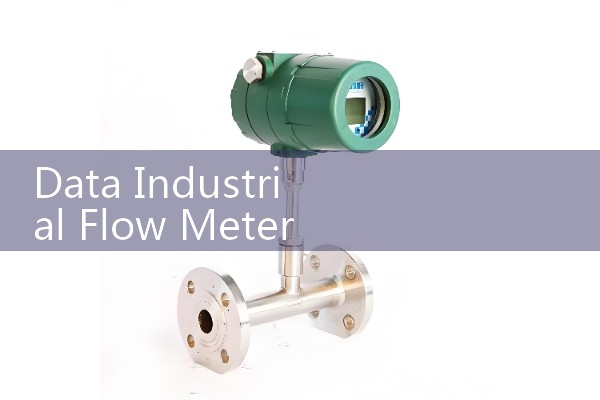
Data Industrial flow meters use a plastic impeller that spins in the pipe stream. A sensor body threads into a saddle or tee fitting and picks up the magnetic pulse from the impeller tip. The sensor is the active part. It generates a low‑voltage sine wave or square wave signal depending on the version. Most failures happen inside the sensor stem. Water ingress, bearing fatigue, or broken pin connections. The stainless steel or PVC tee housing almost never fails unless someone hits it with a forklift. So when the meter stops measuring, you replace the sensor assembly, not the whole fitting.
Common Badger Meter Sensor Models and Part Numbers
Here is the core list engineers actually search for. These fit the Data Industrial product line Badger Meter acquired years ago.
Data Industrial 220 sensor (standard range): This fits pipe sizes DN15 to DN40. The complete sensor assembly part number is 86000‑220. The replacement O‑ring kit is 86015. We see this sensor on small reverse osmosis skids and chemical dosing lines.
Data Industrial 228PV sensor (extended range, potted version): This fits DN50 to DN300. The part number is 86000‑228PV. Potted electronics resist condensation in high‑humidity environments, like wastewater aeration basins in Southeast Asia. If your sensor is installed in a pit that floods occasionally, use the PV version.
Data Industrial 300 series sensor (high temperature): Rated for liquid temperatures up to 130 °C. Part number 86000‑300. Mainly used on boiler feedwater and hot condensate return lines. The cable has Teflon jacket. Do not use the standard 228PV above 80 °C you will melt the internal potting.
Replacement impeller kits: For DN15‑DN40 use kit number 86020‑K1. For DN50‑DN300 use kit 86020‑K2. Always check the K‑factor printed on the original sensor cap. The new sensor must have the same K‑factor or you need to reprogram the display unit. Most Data Industrial meters use K‑factors between 0.1 and 50 pulses per gallon.
What Kills an Impeller Sensor Early
We ship replacement sensors to a lot of countries and the failure pattern is predictable. In the Middle East, sand infiltration scores the impeller bushing. In Vietnam and Thailand, high humidity kills the electronics if someone removed the desiccant breather. In Australian mining camps, vibration from nearby pumps fractures the solder joints inside the 228 non‑potted sensor. A paint factory in Mexico asked us last year why their sensor lasted only three months. They were measuring high‑solids pigment slurry and the impeller was grinding itself to a stub. The fix was not a new sensor it was a strainer
How to Replace the Sensor in 5 Minutes
Most engineers skip the manual after the first swap. Shut the isolation valve. Depressurize the line. Unscrew the knurled retaining nut on top of the sensor body. Pull the old sensor straight out. Do not twist because the old O‑ring may break and drop pieces into the pipe. Lube the new O‑ring with a thin film of silicone grease. Insert the new sensor until it bottoms out and tighten the nut hand tight plus a quarter turn. Do not use a wrench on plastic threads. That is it. On metal tee housings the process is the same but the retaining nut is brass. Wire the red and black leads to the display terminal block. Most Data Industrial sensors output an unpowered pulse signal, so polarity does not matter. If you are replacing a 228PV with a 2‑wire 4‑20 mA loop version, you need to provide 12–24 VDC excitation.
Compatibility With Third‑Party Displays
Many sites pair the Badger Meter sensor with a non‑Badger display. This works fine because the pulse output is a raw frequency signal. You can connect a Data Industrial sensor directly to a PLC high‑speed counter input, a Silver Instruments SIA‑1000 batch controller, or any panel meter that accepts 0–200 Hz pulse input. The K‑factor matching is critical. For example, a 228PV sensor with K=0.56 pulses per liter connected to a display set for K=0.56 will show the correct flow rate. Get one number wrong and the totalizer drifts. We keep a lookup table for DN size versus typical K‑factor. If you lost the original sensor cap, email us the pipe size and we will give you the factory default K‑factor for that meter.
FAQ
How often should I replace the impeller sensor?
In clean water applications the sensor lasts 5 to 8 years. In raw water the impeller bushing wears out in 2 to 3 years. If your flow reading is noisy at low flow but stable above 1 m/s, the bearing is starting to go. Replace it before the magnet tip snaps off.
Can I use one 228PV sensor on different pipe sizes?
Yes, the 228PV sensor body fits saddle fittings from DN50 up to DN300. But the impeller is different for each pipe size range. You must change the impeller along with the sensor if you move the sensor to a different pipe diameter. The K‑factor will change too.
Where can I buy genuine Badger Meter parts if I am outside the US?
Silver Automation Instruments ships Data Industrial compatible sensors and original impeller kits to Southeast Asia, Oceania, Africa, Latin America, and the Middle East. Send us your meter model, pipe size, and K‑factor. We confirm the part number before you pay. No guesswork.
What signal does a Data Industrial sensor output?
Standard 220 and 228 sensors output a low voltage AC sine wave, typically 50–200 mV peak‑to‑peak at minimum flow. The frequency is proportional to flow rate. The 228PV‑S version adds an internal amplifier and outputs a 5 VDC square wave. The 4‑20 mA version is a 2‑wire loop powered transmitter built into the sensor housing. Specify the output type when ordering.
Do I need to recalibrate after sensor replacement?
Not if the new sensor has the same K‑factor as the old one. The meter system is digital and the calibration is just the K‑factor entered in the display. If the K‑factor is different, update the parameter. There is no wet calibration needed unless your local regulations require it for billing purposes.
Need a replacement sensor or impeller kit today?
Contact Silver Instruments directly at [email protected] or call +86-135-1213-1526. WhatsApp: 86-135-12131526. WeChat: +86 13512131526. Tell us the pipe size (DN), liquid type, and the K‑factor on your old sensor cap. We will match the correct Badger Meter compatible part and ship from our Nanjing warehouse within 24 hours for in‑stock items.
 Hot Product
 Related AD