

『3 Inch Flow Meter: Municipal Water Main Volumetric Measuring Tools』Related information(flow rotameter|digital flow meter|balo meter|hydraulic flow meter|volumetric meter|positive displacement meter|pitot tube flow meter|displacement meter|cfm meter|variable area flow meter|inline flow meter|differential pressure flow meter|calibrated flow meter|velocity meter|paddle wheel flow meter|oval gear flow meter|anemometer hvac|multiphase flow meter|doppler flow meter|thorpe tube flowmeter|heat flow meter)
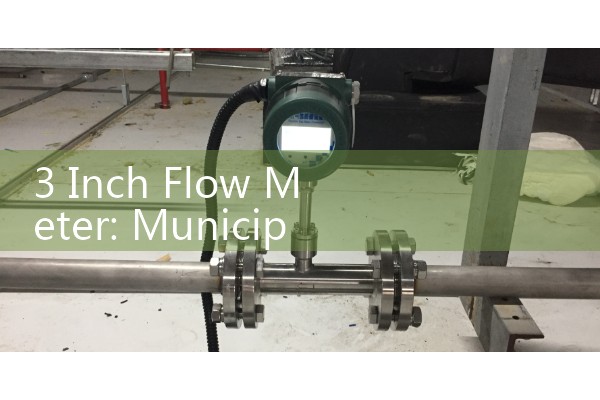
3 Inch Water Main Flow Meter for Municipal Volumetric Measurement
Quick Answer: A 3 inch (DN80) inline electromagnetic flow meter is the most reliable tool for billing-grade volumetric measurement on municipal water mains. It has no moving parts, measures down to 0.1 m/s velocity, and works with drinking water, raw water, and treated effluent. Budget-conscious municipalities in Southeast Asia and the Middle East typically choose a flanged 3 mag meter with IP68 remote electronics because it survives flooded pits and direct burial.
When a 3 Inch Meter Is the Right Size for a Municipal Water Main
Most distribution lines in small to mid-size cities use DN80 or DN100 pipes. A 3 inch meter covers flow rates from roughly 0.5 L/s up to 18 L/s with acceptable accuracy. If your line pressure is around 4 to 6 bar and the pipe is schedule 40 steel or HDPE, a full bore electromagnetic meter fits straight onto the existing flanges. In practice, engineers in water supply companies look at the pipe ID first. They then check the expected minimum night flow. A 3 inch meter with 0.2% ± 2 mm/s accuracy can still register those small trickle flows, which is important for leak detection and non-revenue water reduction.
We have supplied 3 inch battery-powered mag meters to water cooperatives in the Philippines. They install the sensor in a buried concrete chamber and mount the GSM data logger on a nearby pole. Because the meter does not need a straight run longer than 3D upstream and 2D downstream in many cases, it fits inside tight vaults. The flow profile correction circuit built into the Silver Instruments S1 series handles disturbed profiles from elbows or partially open gate valves.
Electromagnetic vs. Mechanical Volumetric Meters on a 3 Inch Main
Mechanical turbine and Woltman meters used to dominate municipal bulk metering. They cost less upfront. However, in practice, bearing wear, scale buildup on the rotor, and suspended solids in river-sourced water cause the calibration to drift within six to twelve months. A water authority in East Africa replaced twelve 3 inch mechanical meters with zero-maintenance electromagnetic meters. They saw a 5% jump in billed volume the next quarter. The old meters were under-registering at low flows common during off-peak hours.
Electromagnetic meters also handle bi-directional flow without extra hardware. In some ring-main networks or elevated storage tank filling-draining cycles, the flow direction reverses. A mag meter logs net volume in both directions and can issue separate totals. This is useful when you need to settle water transfer accounts between two municipalities.
Regarding pressure loss, a full bore electromagnetic meter has none. The measuring tube is identical in diameter to the pipe. Mechanical meters with a measuring insert create a permanent pressure drop of 0.2 to 0.5 bar at peak flow. In low-pressure zones where you have barely 1.5 bar head from a gravity tank, losing 0.3 bar matters.
Installation Data That Engineers Request Before Sending a Quote
We prefer to receive a short list of parameters before quoting a 3 inch municipal water meter. This avoids back-and-forth emails and helps us specify the correct liner, electrode material, and transmitter options. Send us your pressure in bar, temperature in °C, pipe material, pipe OD and wall thickness if using wafer mount, minimum and peak flow rate in m³/h or L/s, and the required power supply (battery, 24 V DC, or 230 V AC). Also mention if you need local display, Modbus RTU output, or 4-20 mA with HART protocol for SCADA integration.
Our team works with consulting engineers in Latin America who typically specify hard rubber liner for raw water. For drinking water with chlorine residual, EPDM liner is standard. Electrodes are 316L stainless steel or Hastelloy C for slightly aggressive river water with low pH. Grounding rings are built into the meter on 3 inch sizes and below, so you do not need separate grounding disks. That simplification reduces installation cost by roughly USD 80 per site.
On the electrical side, most municipal jobs use a remote-mount transmitter. The sensor goes into a buried pit, and the IP68 cable runs up to a wall-mounted converter inside a kiosk. The cable length is pre-defined and compensated during factory calibration. If your site has frequent lightning, specify the integral surge protection. We have seen several installations in subtropical regions where lightning damaged unprotected pulse outputs.
Common Local Requirements for Municipal Metering in Different Regions
Southeast Asia: In Vietnam and Indonesia, many water utilities require MID or OIML R49 type certification. Silver Instruments offers a 3
Middle East: In GCC countries, an ATEX Zone 1 or IECEx certification is occasionally requested for meters installed near chlorination skids. A 3 inch mag meter with Ex ec or Ex d enclosure is available. Most drinking water lines, however, are safe area. The bigger requirement is high ambient temperature: the transmitter must operate at 60 °C inside an unshaded panel. Our remote transmitter is rated to 65 °C without derating.
Africa: Battery life matters. Many borehole or reservoir outlet metering points have no grid power. Our battery-operated 3 inch meter runs up to 7 years on a D-cell lithium pack. The sampling interval is 5 seconds, which is fine for daily totalisation. If you need 1-second logging for pressure transient analysis, the battery life drops to roughly 2 years. Rural water schemes in Tanzania and Uganda use this configuration with an integrated GSM modem to push data to a central billing server.
Calibration, Accuracy and In-Situ Verification
Every 3 inch meter leaves our factory with a wet calibration certificate from an ISO 17025 accredited rig. The calibration points are 0.1, 0.25, 0.5, 1.0, and 10 m/s. Typical accuracy is ±0.15% of reading above 0.5 m/s. Below 0.3 m/s, the error expands but stays within ±1% down to 0.1 m/s. This matters for district metered areas where night flows are below 0.2 m/s.
In-situ verification without removing the meter from the line is possible. Our transmitter runs an electrode resistance and coil impedance check every 15 minutes. If the electrode coating builds up due to manganese or iron bacteria, an alert triggers. Field technicians can then schedule electrode cleaning during the next network shutdown. In Mexico, a customer integrated this diagnostic into their SCADA via Modbus status bits.
Pricing Logic and How to Request a Formal Quotation
A 3 inch electromagnetic meter for potable water with hard rubber liner, 316L electrodes, IP67 compact transmitter, and OIML certificate starts at around USD 850 ex-works. Adding remote mounting adds USD 120. A battery pack with built-in GSM modem adds roughly USD 350. Quantity discounts apply above 10 units. For 50 pieces or more, we can brand the nameplate with the water utilitys logo at no additional charge.
Send us your pipe size (DN), pressure (bar), temperature (°C), minimum and maximum flow rate, power preference, and required approvals. We will return a technical proposal and a commercial offer within 24 hours excluding weekends. You can reach us at:
Email: [email protected]
Tel: +86-135-1213-1526
WhatsApp: 86-135-12131526
WeChat: +86 13512131526
Five Key Questions Municipal Engineers Ask Before Buying a 3 Inch Flow Meter
1. Do I really need a 3 inch meter, or can I use a 4 inch?
Use the pipe ID. If the internal diameter is 80 mm (±2 mm), a DN80 (3 inch) meter matches it. If you have a 100 mm line, go with a 4 inch. Undersizing increases velocity and may push the meter beyond its maximum flow rating. Oversizing loses low-flow sensitivity.
2. What liner material is safe for chlorinated drinking water?
EPDM is standard for cold potable water up to 40 °C. Hard rubber (NR) can handle higher chlorine residuals and occasional raw water batches. PTFE liner is available for aggressive water, but rare on plain drinking water lines.
3. Can the meter register reverse flow for billing?
Yes. A bi-directional electromagnetic meter can log forward net, reverse net, and total net volumes. You select which total drives the billing cycle via the setup menu. The display and pulse output can be configured separately.
4. How often do I need to recalibrate?
Electromagnetic meters have negligible drift. Major water utilities recalibrate every 4 to 5 years as part of legal metrology requirements. In many countries, OIML pattern approval valid for 5 years dictates the re-verification interval. Our diagnostic records help you decide if early recalibration is needed.
5. Is the meter compatible with standard AMR or SCADA systems?
Standard outputs are 4-20 mA, pulse (configurable pulse per volume), RS485 Modbus RTU, and optionally LTE Cat-M1 or NB-IoT. Data protocols are documented in the user manual. We can pre-configure the register map to match your existing SCADA template.
 Hot Product
 Related AD